

【Introduction】In March, the sales of xanthan gum in the domestic market slowed down, upstream manufacturers reduced prices to increase sales, and prices fell slightly. In April, upstream manufacturers started production normally, and some manufacturers may have certain inventory pressure, and there is no lack of price reduction to increase sales within the month.
Xanthan gum market prices fluctuated and fell in March
In March, as the market sales slowed down, upstream manufacturers' intention to reduce prices to increase sales increased. In mid-March, the leading xanthan gum manufacturers took the lead in starting a price reduction trend, but due to the high inventory of traders and the strong intention to resist prices, the decline in the Shandong market was relatively limited. The price of xanthan gum was 21,500-24,000 yuan/ton, down 500 yuan/ton from the beginning of the month, a decrease of 2.15%, and an increase of 1.11% over the same period last year.
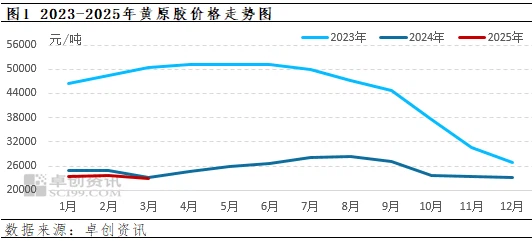
Poor terminal demand, and the export volume of xanthan gum has decreased significantly
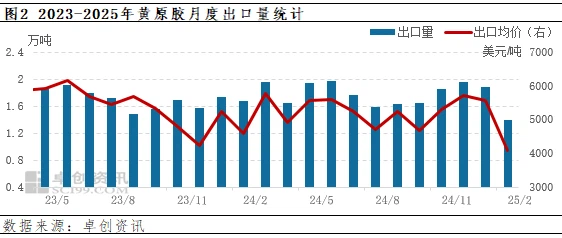
Internationally, the export volume of xanthan gum showed a continuous downward trend from January to February 2025. According to the data of the General Administration of Customs of the People's Republic of China, the export volume of xanthan gum fell to 18,800 tons in January, a decrease of 3.84% from the previous month and 8.09% from the previous year; the export volume in February fell to 14,000 tons, a decrease of 25.70% from the previous month and 16.42% from the previous year, becoming the lowest export volume of xanthan gum in the past two years. In terms of the average export price, there was also a synchronous downward trend from January to February. The average export price in January was US$5,570/ton, a decrease of 2.70% from the previous month; the average export price in February was US$4,091/ton, a decrease of 26.55% from the previous month.
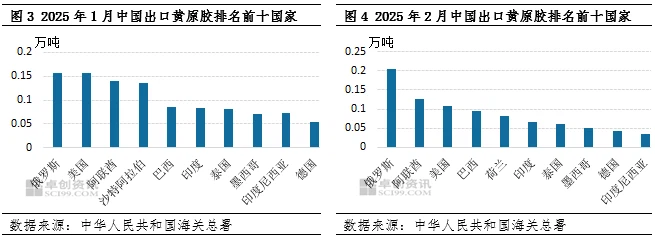
In terms of countries, the top five countries to which China exported xanthan gum in January were Russia, the United States, the United Arab Emirates, Saudi Arabia, Brazil and India, with export volumes of 1,570 tons, 1,560 tons, 1,400 tons, 1,360 tons and 800 tons, respectively. Russia, which ranked first, was comparable to the United States, which ranked second. However, in February, the rankings of the top five exporting countries were adjusted. Russia ranked first with 2,000 tons, but the United Arab Emirates ranked second with 1,300 tons, the United States retreated to third with 1,100 tons, and Brazil and the Netherlands ranked fourth and fifth with 900 tons and 800 tons, respectively. According to Zhuochuang Information, at the beginning of 2025, when the United States increased its tariff policy on China by 10%, some American companies increased their purchases of Chinese orders, but if the tariff increases by another 34%, China's advantage in exporting xanthan gum to the United States will be significantly weakened, and American companies may increase their purchases from European countries by then.
The xanthan gum market may still decline in April
From the supply side, upstream production enterprises started production normally in April, the market supply was relatively abundant, and some manufacturers may have certain inventory pressure, and there is no lack of price reduction and volume within the month. From the demand side, although domestic demand is relatively weak at present, foreign orders in April still have certain support, but affected by the US tariff policy, the overseas situation is relatively turbulent, and the wait-and-see sentiment in the industry is strong.
On the whole, the market price of xanthan gum may fluctuate and decline in April.
Source: Zhuo Chuang Information)