

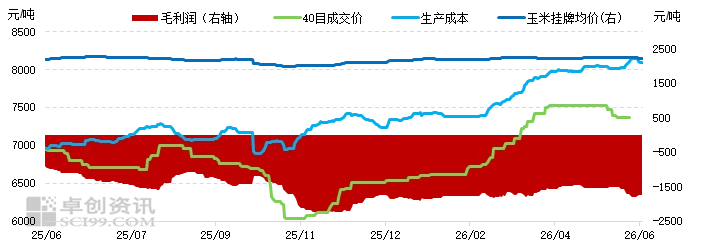
[Introduction]: In June, the domestic MSG market was characterized by high costs, slow demand recovery, and slight price fluctuations. The current industry contradiction lies in the mismatch between rigid cost increases and weak demand recovery, resulting in a lack of sustained price increases and a difficult period of significant price declines. Looking ahead to July, raw material costs will continue to provide support, and a slight recovery in the summer catering industry will drive marginal improvement in demand. Coupled with companies' subjective price stabilization strategies, the MSG market is expected to stabilize, with a low probability of significant fluctuations, continuing the operating logic of "cost support and limited demand recovery."
June MSG Market: Stable with Minor Fluctuations, Relatively Moderate Trading
Recently, the MSG market has been fluctuating at high levels. On June 2nd, several leading companies raised their prices by 100 yuan/ton, attracting widespread attention from upstream and downstream markets. Considering the recent increase in energy costs, the increased pressure on companies, and the maintenance plans of some companies, the mentality of maintaining prices has strengthened, making the price increases by leading companies more indicative of market trends. As of June 5th, the mainstream transaction price for bulk MSG (40-60 mesh) from major MSG manufacturers was 7150-7600 yuan/ton, while the mainstream intended price for 80 mesh was 6900-7200 yuan/ton. Large-particle MSG supply was ample, and transactions were relatively flexible. The price difference between fine and large particles narrowed, and regional price differences across the national market were not significant, with no obvious price fluctuations. Downstream food factories and catering companies purchased on an as-needed basis, with transactions mainly consisting of small and short-term orders. Market sentiment was relatively rational, with no concentrated restocking or panic selling, and overall trading was moderate.

Downstream supply is gradually being absorbed, but demand is lagging behind.
According to data from Zhuochuang Information, the MSG industry's operating rate was 85.4% in the week ending June 5th, with a weekly output of 65,200 tons, a 0.6 percentage point increase from the previous week. Most companies in the industry maintained stable operating rates, with companies in Heilongjiang province gradually recovering, leading to a slight increase in industry supply. As the concentration of the domestic MSG industry continues to increase, leading companies account for over 80% of the production capacity, securing pricing power and strengthening industry collaboration, providing a foundation for stable market operation. On the demand side, end-consumer spending remains weak, with food processing mainly driven by rigid demand and limited new orders, making it difficult to accelerate overall demand. Although channel supply is gradually decreasing, and low-priced supply in the market is also gradually decreasing, the slow increase in market prices has dampened downstream enthusiasm for purchasing high-priced goods, resulting in a slow purchasing pace. The market is primarily driven by rigid demand with little speculation.
High, rigid costs are putting pressure on enterprise profits.
Monosodium glutamate (MSG) production uses corn as its core raw material. As of June 5th, the average listed purchase price of corn for MSG enterprises in Inner Mongolia was 2240 yuan/ton, a year-on-year increase of 1.4%, providing stable cost support. In addition, coal prices have recently fluctuated upwards. Taking Ordos Q5500 kcal thermal coal as an example, the average price on June 5th was 602.5 yuan/ton, a year-on-year increase of 41.8%. Coal and industrial electricity prices remain high, with energy costs accounting for 14%-20%. Coupled with the still high price of sulfuric acid, an auxiliary material, the average price of sulfuric acid on June 4th was 1852.8 yuan/ton, a year-on-year increase of 186.3%, resulting in a continuous rise in overall production costs. Currently, strong cost support limits the room for enterprises to offer discounts, leading to a strong willingness to maintain prices. Some prices are still operating close to the cost line, significantly compressing enterprise profits.
The MSG market in July remains supported by costs, with companies awaiting improved demand.
Looking ahead to July, there are no expectations for a significant decline in costs for corn, energy, and auxiliary materials. The cost floor is clear, and companies lack the incentive to lower prices. With rigid cost support, the downside potential for MSG prices is limited, and the market bottom is stable. Demand for cold dishes in the catering industry, late-night barbecues, and ready-made meals saw a slight increase in July. Coupled with the gradual decline in downstream channel inventory, the pace of restocking may have accelerated slightly, leading to a marginal improvement in demand compared to June. However, the overall recovery remains moderate, and explosive growth is unlikely. MSG companies are likely to continue their stable price strategy, maintaining healthy inventory levels. It is estimated that in July, the mainstream price range for 40-mesh MSG in the Inner Mongolia market will remain between 7200-7500 yuan/ton, and the price range for 80-mesh MSG will be between 7000-7300 yuan/ton. Some specifications may experience slight fluctuations depending on the manufacturer's supply situation. Overall, the core logic of the MSG market in July remains high costs and weak demand recovery, with supply and demand in balance, and the overall market remaining relatively stable.
Source: Zhuo Chuang Information