

The diffusion coefficient is a crucial parameter in understanding the movement of substances in a medium, which is of great significance for various applications, especially in the food and chemical industries. As a supplier of L Tartaric Acid Powder, I often encounter questions from customers about the diffusion coefficient of L Tartaric Acid Powder in water. This blog aims to provide a comprehensive understanding of this topic.
What is the Diffusion Coefficient?
Before delving into the diffusion coefficient of L Tartaric Acid Powder in water, it is essential to understand what the diffusion coefficient represents. The diffusion coefficient, also known as diffusivity, is a proportionality constant that quantifies the rate at which a substance diffuses through a medium. It is defined by Fick's laws of diffusion, which describe the net movement of particles from an area of higher concentration to an area of lower concentration.
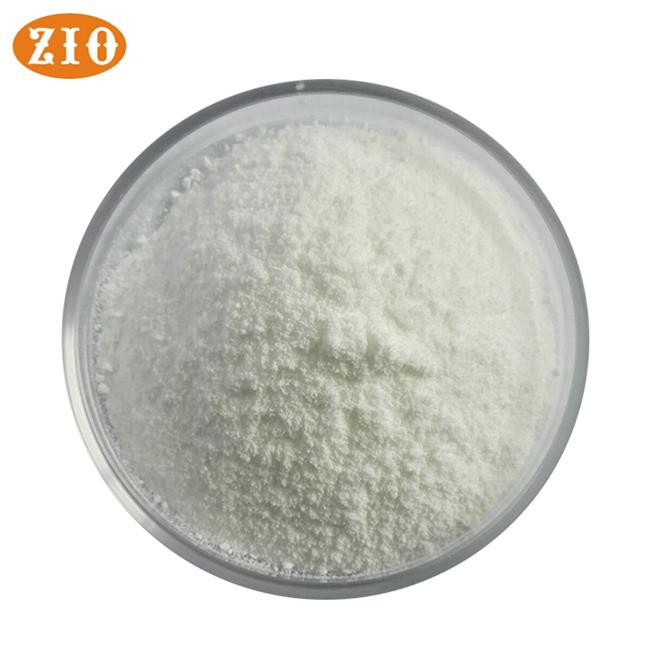

The diffusion coefficient depends on several factors, including the nature of the diffusing substance, the medium through which it diffuses, temperature, and pressure. In the case of L Tartaric Acid Powder in water, the diffusion coefficient characterizes how quickly the tartaric acid molecules spread out in the water due to random thermal motion.
Factors Affecting the Diffusion Coefficient of L Tartaric Acid Powder in Water
Molecular Size and Shape
The size and shape of the L Tartaric Acid molecules play a significant role in determining the diffusion coefficient. Smaller molecules generally diffuse more rapidly than larger ones because they experience less resistance from the surrounding water molecules. L Tartaric Acid has a relatively small molecular size, which allows it to move more freely in the water and results in a relatively higher diffusion coefficient compared to larger organic compounds.
Temperature
Temperature has a profound impact on the diffusion coefficient. According to the Stokes - Einstein equation, the diffusion coefficient is directly proportional to the temperature. As the temperature increases, the kinetic energy of the L Tartaric Acid molecules and water molecules also increases. This leads to more frequent and energetic collisions between the molecules, causing the L Tartaric Acid molecules to move more rapidly and increasing the diffusion coefficient. For example, at a higher temperature, the L Tartaric Acid Powder will dissolve more quickly in water, indicating a higher rate of diffusion.
Concentration Gradient
The concentration gradient, which is the difference in concentration between two regions, affects the diffusion rate. A steeper concentration gradient will result in a faster diffusion rate. When L Tartaric Acid Powder is first added to water, there is a large concentration difference between the area where the powder is located and the surrounding water. As a result, the L Tartaric Acid molecules will diffuse rapidly from the high - concentration region to the low - concentration region. As the diffusion progresses and the concentration becomes more uniform, the concentration gradient decreases, and the diffusion rate slows down.
Viscosity of the Medium
The viscosity of water also influences the diffusion coefficient of L Tartaric Acid. A more viscous medium will offer more resistance to the movement of the L Tartaric Acid molecules, resulting in a lower diffusion coefficient. For example, if the water contains other substances that increase its viscosity, such as proteins or polymers, the diffusion of L Tartaric Acid will be slower.
Measuring the Diffusion Coefficient of L Tartaric Acid Powder in Water
There are several experimental methods to measure the diffusion coefficient of L Tartaric Acid Powder in water. One common method is the diaphragm cell method. In this method, a diaphragm is placed between two compartments filled with water, and a known amount of L Tartaric Acid Powder is added to one compartment. Over time, the L Tartaric Acid molecules will diffuse through the diaphragm into the other compartment. By measuring the change in concentration in both compartments at different time intervals, the diffusion coefficient can be calculated using Fick's second law of diffusion.
Another method is the Taylor dispersion method. In this technique, a small amount of L Tartaric Acid solution is injected into a flowing stream of water. As the solution moves along the tube, the L Tartaric Acid molecules diffuse laterally, causing the dispersion of the injected sample. By analyzing the shape of the dispersed sample, the diffusion coefficient can be determined.
Typical Values of the Diffusion Coefficient of L Tartaric Acid Powder in Water
The diffusion coefficient of L Tartaric Acid in water typically ranges from about (10^{-9}) to (10^{-10}\ m^{2}/s) at room temperature ((25^{\circ}C)). However, this value can vary depending on the specific experimental conditions and the purity of the L Tartaric Acid. For example, if the water contains impurities or if the L Tartaric Acid has a different degree of ionization, the diffusion coefficient may deviate from this range.
Significance of the Diffusion Coefficient in Applications
Food Industry
In the food industry, L Tartaric Acid is widely used as an acidity regulator, antioxidant, and flavor enhancer. Understanding the diffusion coefficient of L Tartaric Acid in water is crucial for determining the proper mixing time and conditions when adding it to food products. For instance, in the production of beverages, a higher diffusion coefficient means that the L Tartaric Acid will dissolve more quickly and distribute evenly throughout the beverage, ensuring a consistent taste and acidity.
Chemical Reactions
In chemical reactions involving L Tartaric Acid in aqueous solutions, the diffusion coefficient affects the reaction rate. A higher diffusion coefficient allows the L Tartaric Acid molecules to come into contact with other reactant molecules more frequently, leading to a faster reaction rate. This is important for optimizing the reaction conditions and improving the yield of the desired products.
Related Products
In addition to L Tartaric Acid Powder, we also supply D Tartaric Acid Food Grade and Potassium Hydrogen Tartrate Powder. These products also have their own unique diffusion properties in water and are widely used in different industries.
Conclusion
The diffusion coefficient of L Tartaric Acid Powder in water is a complex parameter that is influenced by multiple factors such as molecular size, temperature, concentration gradient, and the viscosity of the medium. Measuring this coefficient accurately is essential for various applications in the food and chemical industries. As a reliable supplier of L Tartaric Acid Powder, we are committed to providing high - quality products and technical support. If you have any questions about the diffusion coefficient of our products or are interested in purchasing our L Tartaric Acid Powder or other related products, please feel free to contact us for further discussions.
References
- Cussler, E. L. (1997). Diffusion: Mass Transfer in Fluid Systems. Cambridge University Press.
- Bird, R. B., Stewart, W. E., & Lightfoot, E. N. (2002). Transport Phenomena. John Wiley & Sons.